
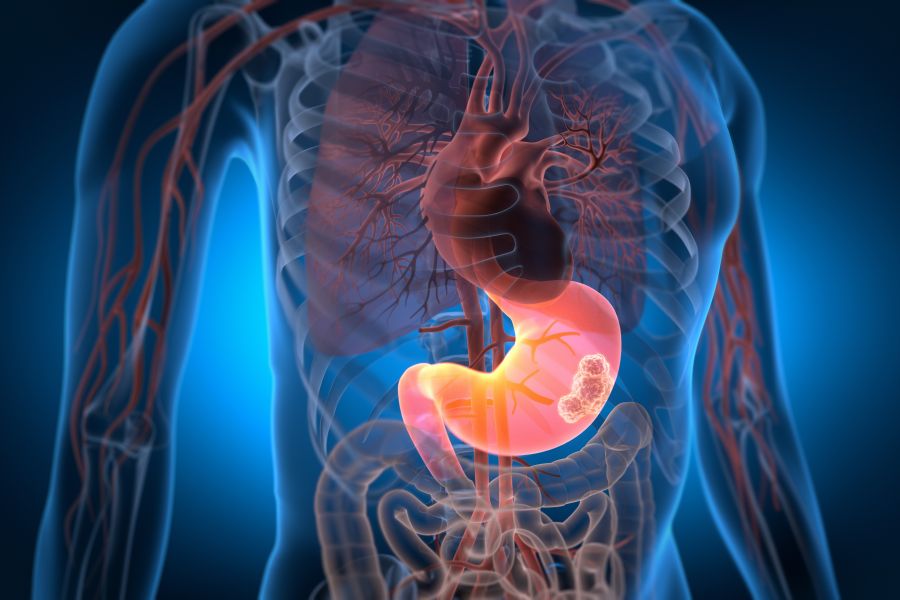
Gastrointestinal stromal tumors (GISTs) are rare tumors that develop in the muscle layer of the gastrointestinal (GI) tract. They most commonly develop in the stomach or small intestine but may also appear in the esophagus.
Although GISTs typically grow slowly — sometimes over several years or even decades — they have the potential to spread to other parts of the body, which is why they are considered a type of cancer.
How are GISTs discovered?
Many GISTs are small and cause no symptoms. They are often found incidentally during an upper endoscopy performed for an unrelated reason.
When symptoms do occur, they may include:
- Gastrointestinal bleeding
- Anemia
- Abdominal discomfort or other digestive symptoms
Once a GIST is identified, additional testing is needed to determine its size, location and whether it has spread. This evaluation typically includes an endoscopic ultrasound and CT imaging.
When is surgery necessary?
Not every GIST requires immediate surgery.
Small gastric GISTs measuring less than 2 centimeters can often be safely monitored with periodic endoscopy and imaging because they tend to behave less aggressively. Observation is often an appropriate option for older adults or people with medical conditions that increase surgical risk.
Larger tumors, however, generally require surgical removal.
For GISTs in the stomach, surgery typically removes both the tumor and a small margin of healthy stomach tissue. GISTs that develop in the small intestine are also usually treated surgically because they carry a somewhat higher risk of aggressive behavior.
The benefits of robotic surgery
Many GISTs can be removed using minimally invasive robotic surgery.
The robotic platform provides surgeons with enhanced visualization and greater precision while allowing patients to benefit from smaller incisions, less postoperative discomfort and a faster recovery than traditional open surgery.
In some cases, GISTs are larger or located near other organs, requiring more complex procedures that may involve removing part of the stomach or portions of nearby organs, such as the pancreas, spleen or colon. Even these operations can often be performed using robotic-assisted techniques.
When medication is part of the treatment plan
Some patients benefit from taking an oral targeted therapy before surgery, especially for patients whose GIST has already spread to areas such as the liver or the lining of the abdomen. In those cases, medication is usually the primary treatment.
This approach can shrink the tumor, making surgery less extensive and potentially reducing surgical risks. The decision to use medication — and which medication is most appropriate — depends on the specific genetic mutations identified in the tumor biopsy.
If the tumor responds well to therapy and it can be safely removed, research supports surgical removal of any remaining tumors. Masses that have been in place for a long time will eventually develop additional mutations, potentially making them resistant to medications.
A small number of patients also have inherited genetic syndromes associated with GIST. Identifying these conditions early is important because they may require additional treatment or special planning before surgery.
Why multidisciplinary care matters
Because GISTs are rare, treatment is best coordinated by an experienced multidisciplinary team working together to develop an individualized treatment plan. This team often includes fellowship-trained surgical oncologists, medical oncologists, advanced gastroenterologists, radiologists, pathologists and genetic counselors.
At Northside Hospital Cancer Institute, Atlanta Liver and Pancreas Surgical Specialists review cases during a weekly multidisciplinary conference to ensure each patient receives the most appropriate treatment strategy.
The program also includes one of the Southeast's busiest minimally invasive robotic surgery programs for GISTs and other upper gastrointestinal, liver, bile duct and pancreatic tumors, providing patients with extensive experience in treating these rare cancers.
FIND MORE ABOUT THE LIVER & PANCREAS PROGRAM AT NORTHSIDE.


