
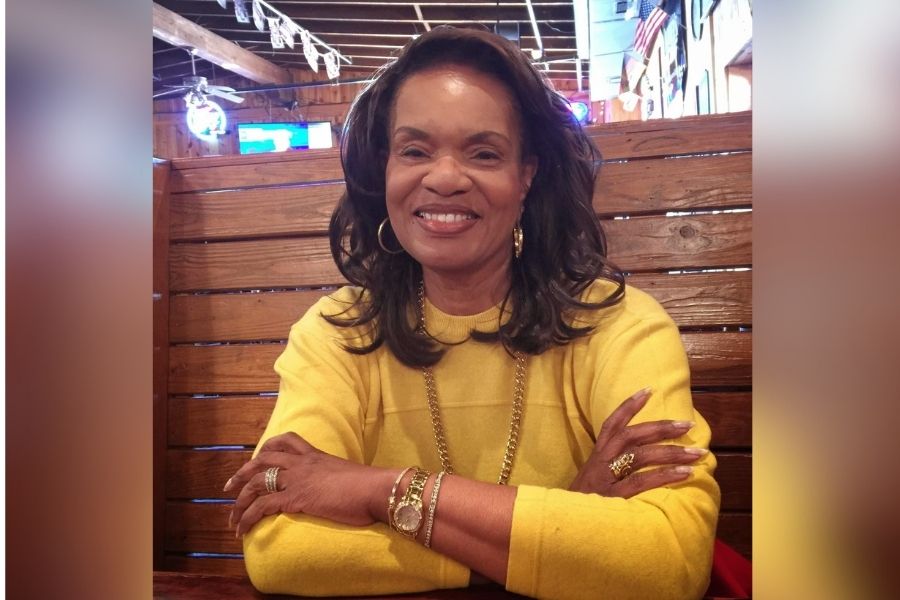
A few months before her 40th birthday in 1988, Stonecrest resident Doris Gervasi received news that would change the course of her life: She had sarcoidosis, a rare inflammatory disease that can affect multiple organs but most commonly involves the lungs.
Seeking answers and specialized care, Doris contacted her primary care physician, who referred her to another physician specializing in pulmonary diseases. Dr. Ralph Haynes, who is now retired from Pulmonary & Critical Care of Atlanta, began a treatment plan for Doris. There, she began a decades-long journey of monitoring, treatment, and learning how to live with a complex chronic condition.
“I remember all of a sudden having to take frequent breaks, just doing things I’d typically do every day — getting dressed for work, taking care of my family, my home and running errands,” Doris said.
Sarcoidosis occurs when clusters of inflammatory cells, called granulomas, form in the body. Although the condition can affect many organs, it most commonly involves the lungs and lymph nodes in the chest. Its exact cause is unknown, and its course varies widely. Some people experience few or no symptoms, while others live with the condition for years and require ongoing treatment and monitoring.
“At the time, I did not know what sarcoidosis was or what it would even mean for my future,” she said.
When sarcoidosis affects the lungs, it may cause a persistent dry cough, shortness of breath, wheezing, chest pain, and fatigue. Over time, pulmonary sarcoidosis can also cause permanent lung scarring, known as pulmonary fibrosis, which can make breathing more difficult and may contribute to pulmonary hypertension.
Over the years, Doris continued receiving care at Pulmonary & Critical Care of Atlanta. Her medical team monitored her lung health, adjusted her treatment as needed, and helped her understand changes in her condition. Her care has spanned generations of physicians, beginning with Dr. Ralpy Haynes and continuing for nearly two decades with Dr. Paul Boyce.
“Caring for her for nearly 20 years has been one of those relationships that reminds me why I have stayed with this practice for so long,” said Dr. Paul Boyce, a pulmonologist with Pulmonary & Critical Care of Atlanta. “She is feisty, assertive, and never shy about telling me what she thinks, and she still speaks fondly of Dr. Ralph Haynes, who cared for her before me. That connection means a great deal to me. Dr. Haynes still mentors me, long after his retirement, and over the years, this practice has become much more than a place where I work. It has become a family, built on relationships that span generations of physicians and patients. I believe deeply in loyalty and commitment, probably to a fault, and it has been a privilege to carry forward what others have built and to care for patients who have been part of that history.”
A new chapter in her care
Around 2020, Doris was diagnosed with pulmonary arterial hypertension (PAH) associated with sarcoidosis. PAH is a rare, progressive condition that affects the arteries in the lungs and causes the right side of the heart to work harder to pump blood. Although there is no known cure, treatment can help control symptoms, limit further heart and lung damage, and improve quality of life.
For Doris, the additional diagnosis marked a new chapter in her care.
“When I learned I had pulmonary hypertension, I was concerned about what it would mean for my health and independence,” Doris said. “The shortness of breath and fatigue made everyday activities more difficult, and I had to learn to listen to my body and adjust how I approached each day.”
Because sarcoidosis-associated pulmonary hypertension is complex and can worsen over time, specialized care and ongoing monitoring are important. Doris’ care team has continually reassessed her condition and adjusted her treatment to help manage her symptoms and support her quality of life.
“Sarcoidosis-associated pulmonary hypertension is particularly complex and often requires a multidisciplinary, individualized approach,” said Dr. Boyce.
“During nearly 20 years of caring for Doris, I have watched treatment options evolve tremendously. But advances in medicine do not replace experience or the physician-patient relationship. Medicine is both a science and an art, and long-term relationships with patients like Doris have helped shape how I apply that knowledge to the person in front of me.”
A trusted team through the years
Throughout her journey, Doris has witnessed significant advances in pulmonary medicine. But the compassionate and personal care she found at Pulmonary & Critical Care of Atlanta has remained constant.
“The physicians and staff have been with me through every stage of this journey,” Doris said. “They listen to my concerns, answer my questions, and treat me like a person, not just a diagnosis. Knowing I have a team that understands my condition has meant so much to me.”
Now, decades after her initial diagnosis, Doris hopes sharing her experience will encourage others with persistent or unexplained respiratory symptoms to seek medical care, ask questions, and remain actively involved in their treatment.
“Do not be afraid to speak up, ask questions, and learn as much as you can about your condition,” she said. “You have to keep going, listen to your body, and work with doctors you trust.”
LEARN MORE ABOUT PULMONOLOGY SERVICES AT NORTHSIDE.
